
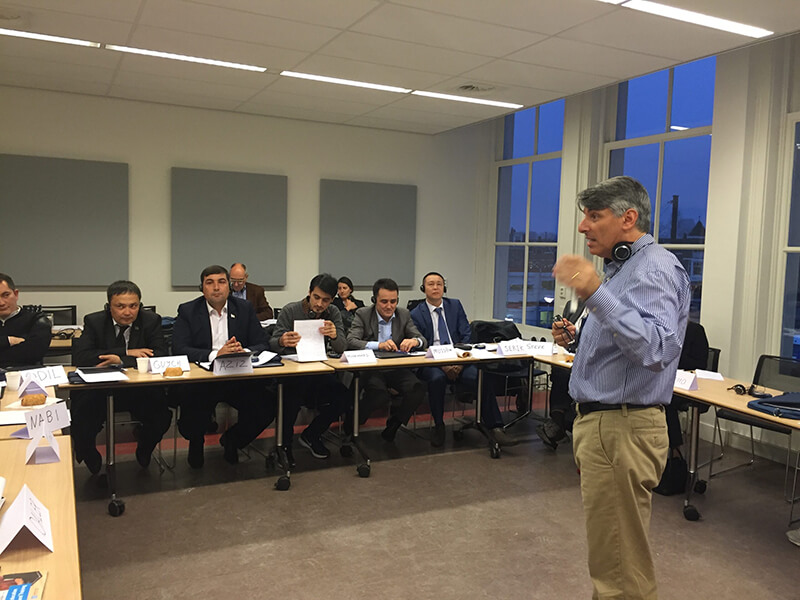
The key benefit of scientific mediation and facilitation is that it allows all parties to come to the negotiating table with a clear understanding of the facts and a shared understanding of the potential outcomes. This increases the likelihood of a successful resolution to the conflict and ensures that all parties walk away with a positive outcome.
Four Worlds brings together a team of science educators and process experts with extensive experience in water conflict management, water management, land resource management, religious dispute resolution, technical assessments, and building and maintaining collaborative decision-making processes. The team works closely with each client to understand their unique needs and challenges and then develops a tailored approach to addressing these issues.
Our involvement often begins with a thorough evaluation of the near-term and long-term potential for cooperation and a thorough assessment of options to move forward collaboratively. Four Worlds consultants also aim to bring all parties involved in a dispute to the negotiating table to find common ground and produce a mutually beneficial outcome. Through scenario exploration, clients are encouraged to propose possible outcomes and come up with creative, innovative solutions. Another method commonly employed is using integrative bargaining to increase stakeholder inclusion, find common ground, and transform conflicts to produce a greater outcome than could otherwise have been achieved.
Using these methods and more, Four Worlds is able to increase stakeholder inclusion, which serves to transform conflicts, thereby producing a greater outcome than could otherwise have been achieved.
A mediator’s responsibility is to help the people in conflict communicate and work together to find a solution that everyone can agree on. They don’t pick sides or make decisions for the people involved, but they help them find common ground and reach a compromise. Mediation is a voluntary process, which means that the people involved choose to participate and have a say in the final decision. It’s a positive way to resolve conflicts, improve relationships, and find a win-win solution where everyone’s needs and feelings are considered.
A facilitator’s responsibility is to guide and support a group of people to work together effectively, encouraging everyone to participate, and helping the group find solutions or make decisions collectively.
Facilitation is useful in many settings, such as classrooms, meetings, or community gatherings. It helps the group to make decisions, generate ideas, and work towards common goals in a respectful and productive way.
The facilitator doesn’t impose their own ideas or make decisions for the group. Instead, they help the group members work together as a team and find their own solutions. They may use visual aids, group exercises, or other tools to help the group understand complex issues and reach consensus.
Four Worlds consultants offer religious mediation to help congregations and members of faith-based communities transform and resolve intra- and interfaith disputes and promote healing for the community. It is designed to be a collaborative and supportive process that helps parties find common ground and work together to find solutions that are mutually beneficial. It is particularly useful in disputes that involve deeply held beliefs and values, such as disputes within religious communities or conflicts between faith-based organizations.
Religious mediation involves working with individuals and groups to identify underlying values, interests, and needs that may be at the heart of a dispute. The mediator may also work to identify areas of common ground and help parties find ways to work together to achieve their goals. At Four Worlds, we believe that spirituality and faith can be powerful tools in resolving conflicts and promoting understanding between parties.
The process of religious mediation typically involves an initial meeting with the parties to discuss the dispute and identify areas of agreement and disagreement. The mediator will then work with each party separately to explore their values and beliefs and identify potential solutions that align with those values. The mediator may also work with the parties together to facilitate dialogue and promote understanding.


Positive transformation
in our relationship with our world’s water and with each other.
Four Worlds © 2017-2024